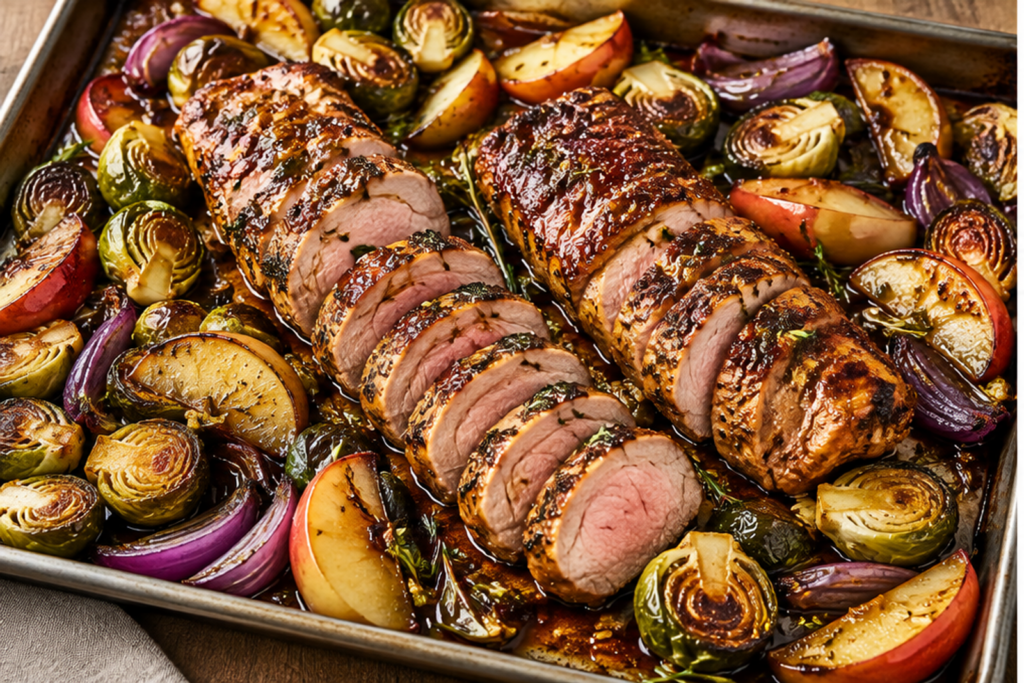
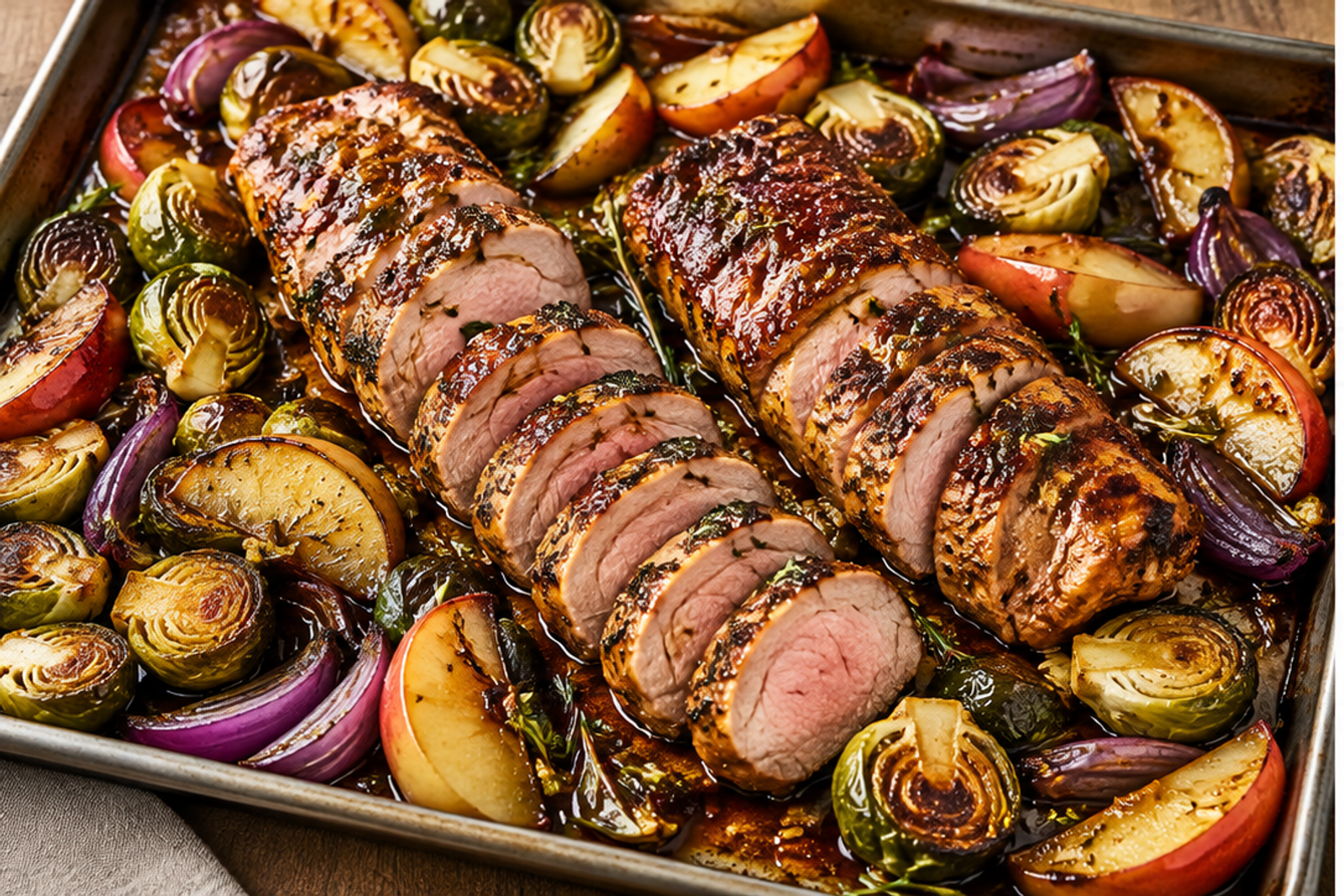
apple cider pork tenderloin is exactly the kind of seasonal recipe worth saving: approachable enough for a weekday, polished enough for company, and built around the cozy flavors people crave in October. The finished dish delivers rosy pork slices, caramelized sprouts, and glossy cider apples without an unnecessarily complicated method.
Why You’ll Love This One-Pan Apple Cider Pork Tenderloin with Brussels Sprouts
This recipe balances comfort, contrast, and convenience. Every ingredient earns its place, the instructions include practical visual cues, and the final presentation is naturally Pinterest-worthy.
- Seasonal: warm spices and autumn produce make it ideal for October and Thanksgiving planning.
- Reliable: clear temperatures, textures, and resting times remove guesswork.
- Make-ahead friendly: prep components early and finish when you are ready to serve.
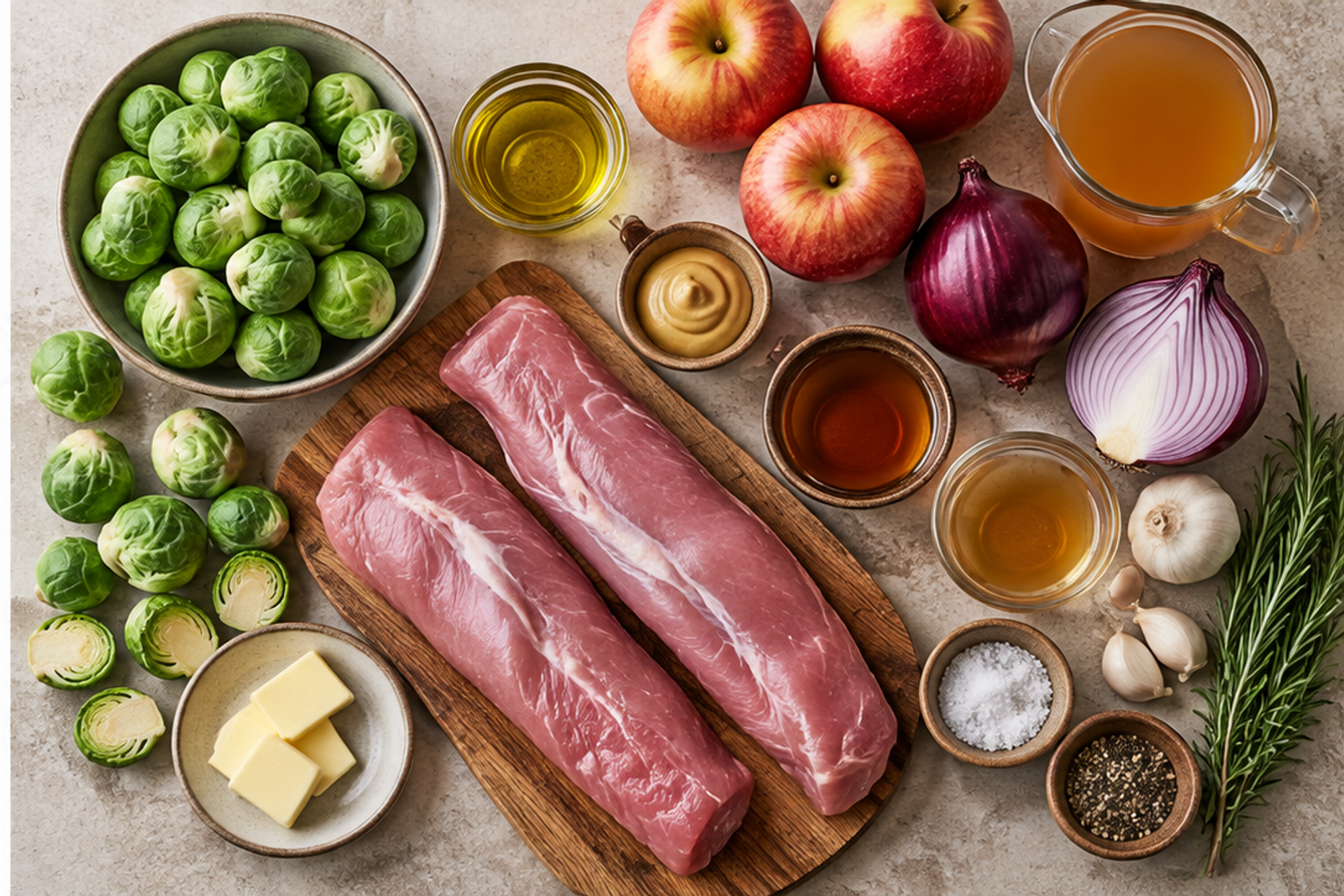
Ingredients for apple cider pork tenderloin
Measure the ingredients before starting and use the freshest seasonal produce available. Bring chilled dairy and eggs closer to room temperature when smooth mixing matters, and cut produce into uniform pieces so everything cooks evenly.
How to Make apple cider pork tenderloin
Follow the recipe card in order and rely on the visual cues as much as the clock. Build flavor during the browning stage, keep the heat controlled, and allow the finished recipe to rest before serving so its texture settles properly.
Five Tips for the Best Results
- Read the complete recipe before beginning.
- Prepare and measure every ingredient first.
- Do not rush browning, proofing, chilling, or resting.
- Taste before adding extra salt or sweetness.
- Save the final garnish until serving for the freshest appearance.
Serving Ideas
Serve apple cider pork tenderloin with mashed potatoes, wild rice, or crusty bread. Use a simple plate or pan, keep the signature texture visible, and add only a restrained garnish so the main recipe remains the focus.
Storage and Make-Ahead Instructions
Cool leftovers promptly and transfer them to a covered container. Refrigerate per the recipe-card notes. For the best texture, keep crisp toppings or garnishes separate and add them after reheating or immediately before serving.
Smart Ingredient Swaps
If an ingredient is unavailable, choose a substitute that performs the same job rather than simply matching its flavor. Replace dairy with an unsweetened alternative of similar richness, exchange nuts for toasted seeds when appropriate, and use another firm seasonal fruit or vegetable only when its moisture level is comparable. When changing spices, begin with half the quantity and build gradually. These measured substitutions keep the structure of apple cider pork tenderloin intact while giving you room to use what is already in your kitchen.
Troubleshooting the Recipe
If the mixture looks too thick, add liquid one tablespoon at a time; if it seems loose, allow a few extra minutes of gentle cooking or resting before making a larger adjustment. Pale food usually needs more browning time rather than more seasoning. For baked recipes, check the center and rotate the pan once if your oven has hot spots. For stovetop recipes, lower the heat before dairy or cheese is added. Small, patient corrections protect the texture and keep the finished recipe looking as inviting as the photographs.
Frequently Asked Questions
Can I prepare apple cider pork tenderloin ahead?
Yes. Complete the advance-prep steps described in the notes, refrigerate safely, and reserve the final baking, crisping, glazing, or garnishing step for serving day.
Can I substitute ingredients?
Small swaps are possible, but preserve the main liquid-to-dry ratios and choose ingredients with similar fat and moisture levels. Strongly flavored ingredients should be adjusted gradually.
How do I know when it is done?
Use the recipe’s temperature and visual cues. The correct color, texture, and internal temperature are more dependable than time alone.
More Seasonal Inspiration
For additional baking technique, explore the King Arthur Baking guides. You may also enjoy our brown butter plum streusel cake.
apple cider pork tenderloin offers the mix of seasonal flavor, dependable technique, and irresistible presentation that turns a new recipe into a repeat favorite. Save it now and come back whenever you want a cozy result with a straightforward method.
PrintOne-Pan Apple Cider Pork Tenderloin with Brussels Sprouts
Apple cider pork tenderloin roasts with Brussels sprouts, apples, and a maple-Dijon glaze for an easy autumn dinner.
- Prep Time: 20 minutes
- Cook Time: 35 minutes
- Total Time: 65 minutes
- Yield: 6 servings
- Category: Dinner
- Method: Roasting
- Cuisine: American
Ingredients
- 2 pork tenderloins, about 1 pound each
- 1 pound Brussels sprouts, halved
- 2 firm apples, cut into wedges
- 1 red onion, cut into wedges
- 2 tablespoons olive oil
- 1 teaspoon kosher salt
- 1/2 teaspoon black pepper
- 3/4 cup apple cider
- 2 tablespoons Dijon mustard
- 2 tablespoons pure maple syrup
- 1 tablespoon apple cider vinegar
- 2 garlic cloves, minced
- 1 teaspoon chopped rosemary
- 1 tablespoon unsalted butter
Instructions
- Prepare the pan: Heat oven to 425°F (220°C). Toss Brussels sprouts, apples, and onion with 1 tablespoon oil, half the salt, and pepper. Roast 10 minutes.
- Sear the pork: Pat pork dry and season with remaining salt. Sear in remaining oil for 2 minutes per side.
- Make the glaze: Whisk 1/2 cup cider, Dijon, maple, vinegar, garlic, and rosemary. Reserve 3 tablespoons in a clean bowl.
- Roast: Add pork to the sheet pan and brush with glaze. Roast 18 to 24 minutes until pork reaches 145°F (63°C).
- Finish the sauce: Rest pork 10 minutes. Simmer reserved glaze with remaining cider and butter until glossy, then spoon over sliced pork.
Notes
Store leftovers promptly in a covered container and follow the make-ahead guidance in the article. Images are AI-generated illustrations; recipe not kitchen-tested.
At the table